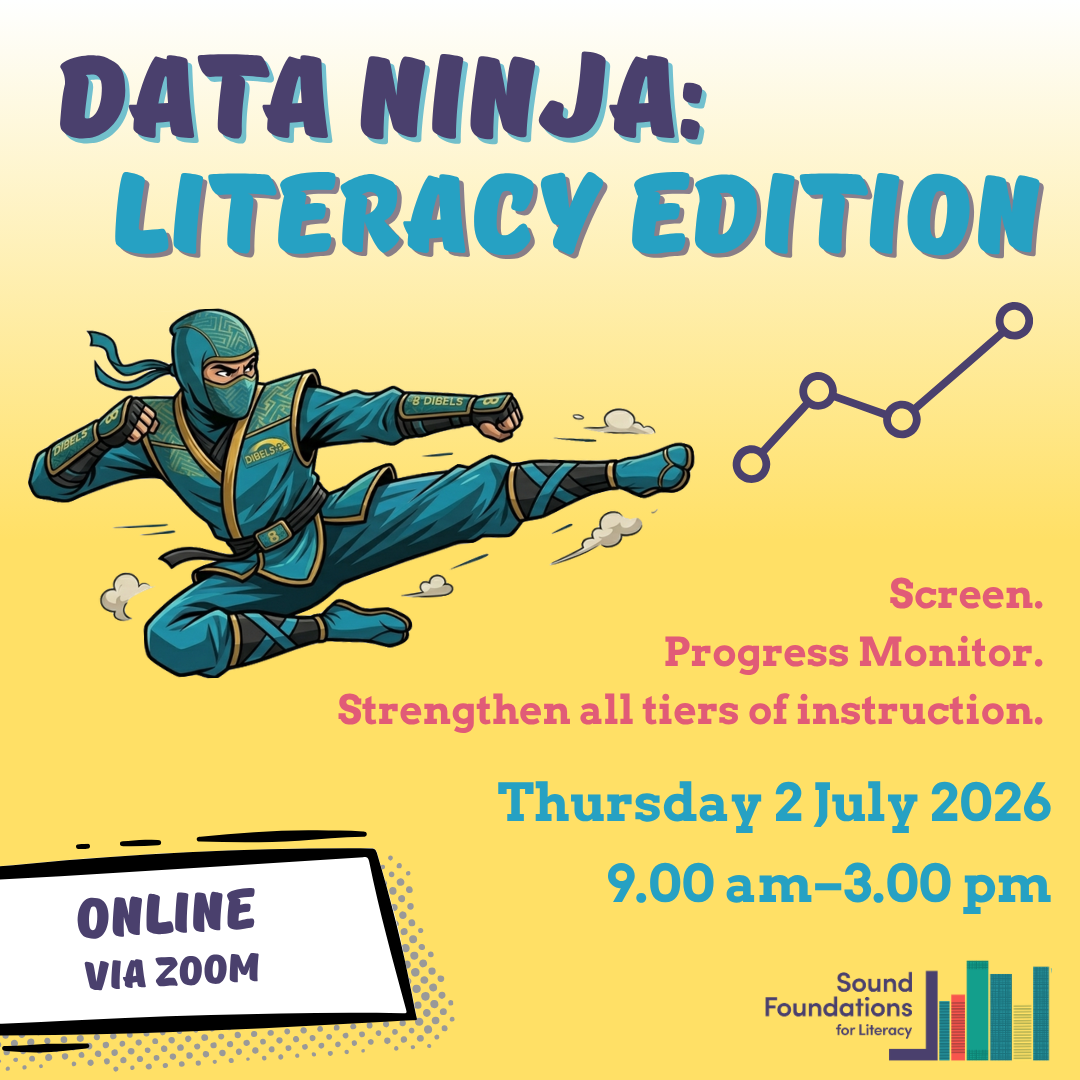
Is the instruction working? Is the help helping?
Using DIBELS and other curriculum-based measurements to make confident instructional decisions.
You’ve collected the data. Now what?
This practical online workshop is designed for educators who already use DIBELS and want to make better instructional decisions from the information it provides. Rather than focusing on administration or scoring, this workshop explores what happens next: analysing benchmark data, identifying key patterns, determining instructional priorities and using progress monitoring to evaluate whether teaching and intervention are having the impact we’re aiming for. DIBELS will make up the majority of examples for the day, while other literacy curriculum-based measurement principles are also applied to areas such as handwriting fluency.
Who is it for?
This workshop is ideal for:
- School leaders
- Literacy leaders
- Classroom and intervention teachers
- SENCO, LSC and RTLB
Prerequisite: Participants should already understand DIBELS benchmark assessment, be familiar with the main subtests and have experience viewing or using DIBELS data. This is not an introductory DIBELS administration workshop.
What you will learn
Participants will learn how to:
- Analyse DIBELS data at cohort, class, group and individual levels
- Identify meaningful patterns and instructional priorities
- Decide when concerns point to Tier 1 instruction, targeted support or intensive intervention
- Select appropriate progress-monitoring subtests and grade levels, and set student goals
- Create and interpret progress monitoring graphs and trends
- Apply decision rules to continue, adjust or intensify instruction
- Apply curriculum-based measurement principles beyond DIBELS
Workshop information
| Item | Details |
|---|---|
| Format | Live online workshop (Zoom) |
| Facilitator | Emma Nahna |
| Individual registration | $230 incl. GST |
| School-team registration | $500 incl. GST (up to 5 named participants from the same school, attending from one location) |
| Recording | Included for 30 days after the workshop |
| Resources | Printable workbook, activities, case studies, and digital resources |
The workshop will be interactive and includes realistic data-analysis activities, case studies, graph interpretation and practical planning tasks. Attendance is limited to 50 participants to support discussion and application.

Reviews
There are no reviews yet.